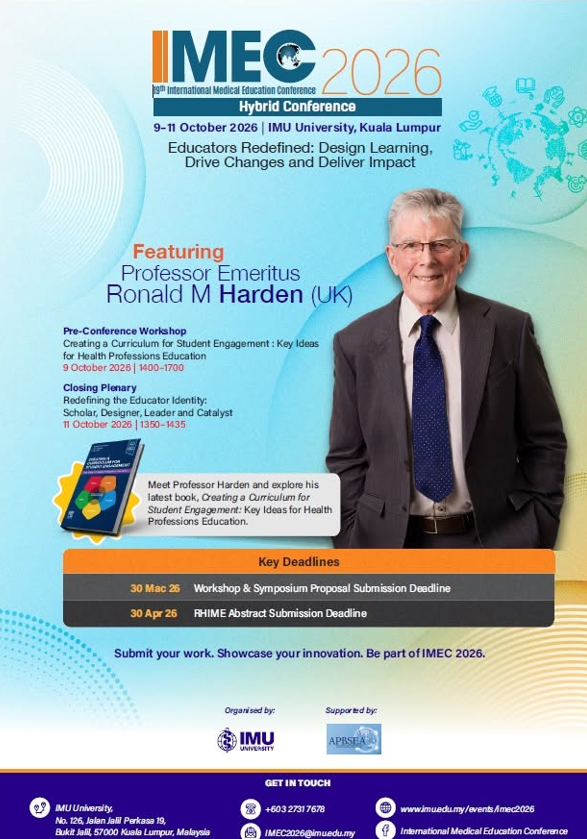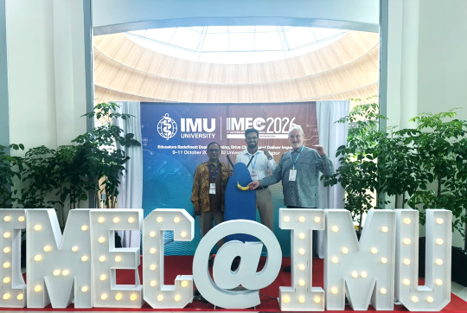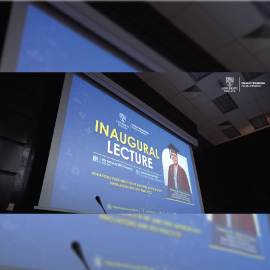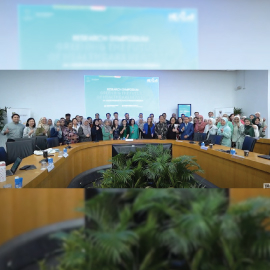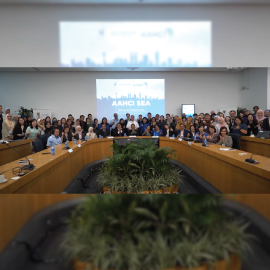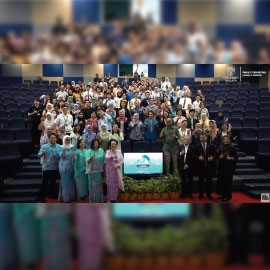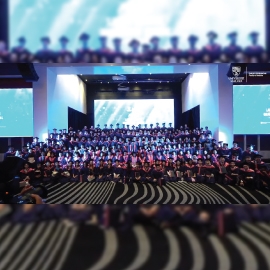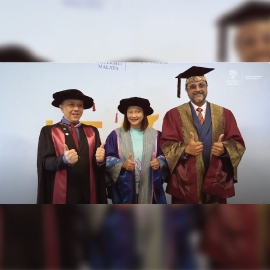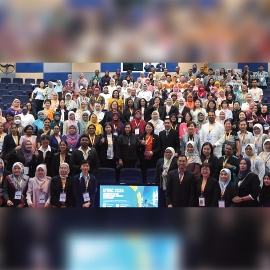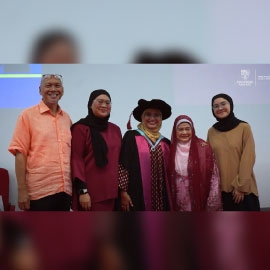

The 19th International Medical Education Conference (IMEC 2026), held at IMU University in Kuala Lumpur from 9–11 October 2026, brought together health professions educators, clinicians, researchers and leaders from around the world to exchange ideas, share experience and showcase educational innovation. Its theme, “Educators Redefined: Design Learning, Drive Changes, and Deliver Impact”, reflected the changing role of educators amid evolving learner needs, new pedagogical approaches and emerging technologies, including artificial intelligence. The program also addressed innovations in teaching and learning, values and professionalism, curriculum design, assessment, faculty development, leadership and sustainable practice.
Black Belt Academy of Surgical Skills (BBASS) by Prof. Dr. David John O’Regan representing from Medical Education and Research Development Unit (MERDU) and Faculty of Medicine, were honored to be shortlisted for the IMU–Ron Harden Innovation in Medical Education (RHIME) Award, named after Emeritus Professor Ronald Harden, whose contribution was integral to the development of IMU. His closing plenary, framed through The Wizard of Oz, offered a powerful reminder that the teacher remains the most important element in education. Although the educator’s role is often underdeveloped and undervalued, it is indispensable. Artificial intelligence is now firmly embedded in education; the question is no longer whether it will be used, but whether it will be used responsibly, with teachers actively shaping its purpose and application.
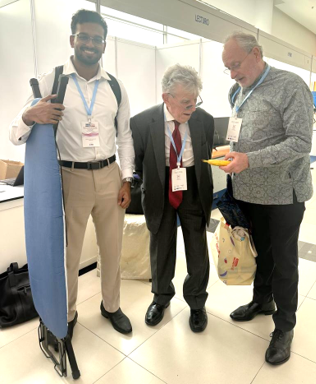
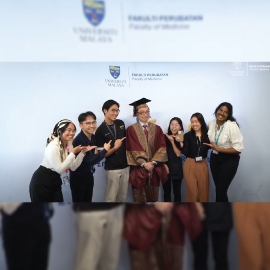
Aadarsh joined Prof. Dr. David John O’Regan on stage in a short demonstration showing how clearly and simply surgical skills can be taught. The presentation made an impact and was warmly received. It was a privilege to share the stage with a student, and the experience reinforced an important lesson: we do not listen to the student voice often enough. Meaningful educational change requires learners to be included not merely as recipients of teaching, but as active partners in its design and delivery.