
🌏 Call for Submissions: Traditional & Cultural Heat Management Practices in Southeast Asia
As temperatures continue to rise across Southeast Asia, many of the solutions for living with extreme heat may already exist within our communities and cultural heritage.
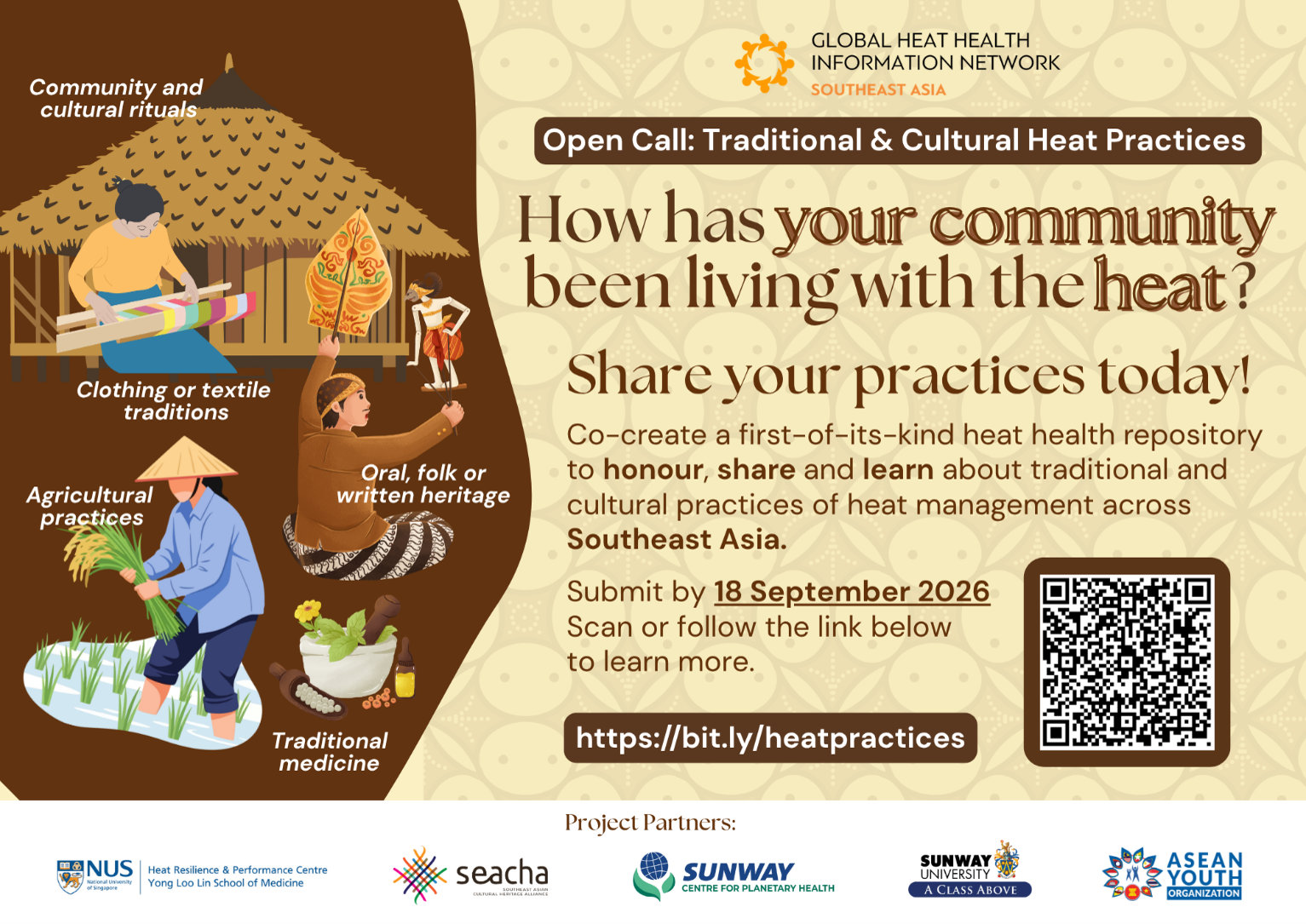
The Global Heat Health Information Network (GHHIN) Southeast Asia Hub, together with the Southeast Asia Cultural Heritage Alliance (SEACHA), Sunway Centre for Planetary Health (SCPH), and ASEAN Youth Organization (AYO), invites community members, practitioners, researchers, and knowledge holders to contribute to a regional initiative documenting traditional and cultural heat management practices.
What are we looking for?
Community-led submissions showcasing traditional knowledge and practices related to heat management, including:
• 🏡 Built Environment – Vernacular architecture, passive cooling techniques, and traditional shading practices
• 🥗 Daily Life – Cooling foods and diets, traditional medicine, clothing, and textile traditions
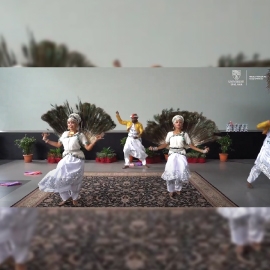
• 🌾 Cultural Heritage – Community rituals, agricultural practices, oral histories, and other locally adapted approaches to coping with heat
• 💡 And many more innovative or inherited practices from across Southeast Asia
Why participate?
Your contribution will help:
• 🌍 Preserve and celebrate Southeast Asia's rich cultural knowledge on heat resilience.
• 🗺️ Support the development of community-driven approaches to heat health and climate adaptation.
• 📖 Contribute to the first publicly accessible Traditional and Cultural Heat Health Repository, hosted by the GHHIN Southeast Asia Hub.
• ⭐ Selected submissions may be featured as case studies, multimedia stories, and regional publications produced by the organising partners.
Submission Details
📅 Submission Period: 1 July – 18 September 2026
🔗 Submit your contribution here: http://bit.ly/heatpractices
📧 For enquiries: heathealth.sea@nus.edu.sg
Together, let's honour, preserve, and share Southeast Asia's rich heritage of heat resilience for future generations.
We encourage everyone to share this opportunity with colleagues, community organisations, researchers, and networks who may be have valuable knowledge to contribute.